
The Benefits of Car Maintenance for Long Term Cost Savings
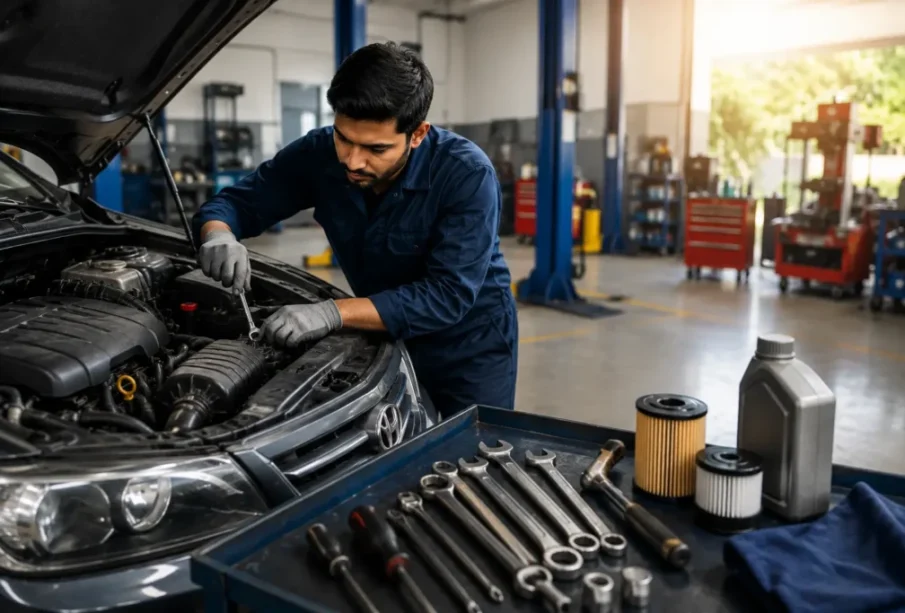
Owning a vehicle is one of the most significant financial investments the average American makes, second only to housing. Yet, while homeowners readily invest in roof repairs and plumbing upkeep to protect their property value, drivers frequently treat automotive maintenance as an optional, discretionary expense. It is easy to see why. When a vehicle runs smoothly, scheduling an oil change or paying for a fluid flush feels like spending money on a problem that does not exist.
This perspective is a costly financial illusion. The true value of routine automotive upkeep is not found in what it accomplishes today, but in what it prevents tomorrow. Skipping a sixty-dollar oil change does not save sixty dollars; it borrows thousands of dollars from your future self at a catastrophic interest rate. By understanding the direct, mathematical connection between preventative care and long-term cost savings, drivers can shift their mindset from viewing maintenance as a repetitive chore to recognizing it as a high-yield investment strategy.
The Financial Math of Preventative Care vs. Catastrophic Repair
To appreciate the economics of vehicle maintenance, one must compare the predictable, low costs of prevention against the volatile, inflated costs of reactive repairs. Automotive components fail according to a predictable trajectory. Mechanical parts wear down, lubricants degrade, and rubber hoses dry out. When these minor issues are ignored, they trigger a domino effect that compromises much larger, more expensive systems.
Consider the engine lubrication system. Engine oil reduces friction, dissipates heat, and captures microscopic debris. Over time, heat breaks down the chemical structure of the oil, reducing its viscosity and causing it to transform into a thick, tar-like sludge.
Engine Upkeep: Oil Changes vs. Total Engine Failure
A standard factory-recommended oil change using synthetic oil costs between seventy and one hundred twenty dollars, depending on the vehicle size and regional labor rates. Performing this service three times a year establishes a predictable annual expenditure of roughly three hundred dollars.
If a driver neglects this schedule, the engine oil stops lubricating the moving internal components. Pistons scrape against cylinder walls, crankshaft bearings wear flat, and intense thermal energy warps metal seals. Within a few years, or even a few months of severe neglect, the engine seizes entirely. Replacing a modern internal combustion engine requires complete extraction, specialized labor, and expensive machinery. The bill for a remanufactured or new engine replacement routinely scales between four thousand and nine thousand dollars.
Cooling System: Coolant Flushes vs. Blown Head Gaskets
The cooling system operates under a similar economic scale. Anti-freeze prevents the engine from overheating and contains corrosion inhibitors that protect the radiator and water pump. Over several years, these inhibitors break down, allowing rust and mineral scale to accumulate inside the engine block.
A professional cooling system flush costs approximately one hundred fifty to two hundred fifty dollars and is typically required every thirty thousand to fifty thousand miles. Neglecting this maintenance causes the engine to overheat, which almost instantly warps the cylinder head and cracks the head gasket. Replacing a blown head gasket is incredibly labor-intensive, forcing mechanics to dismantle the top half of the engine. This repair bills at fifteen hundred to three thousand five hundred dollars.
Maximizing Fuel Economy and Daily Operating Efficiency
The financial benefits of routine maintenance extend far beyond avoiding catastrophic mechanics bills. Upkeep directly impacts day-to-day operational expenses, specifically fuel consumption. With fluctuating gasoline prices across the United States, keeping a vehicle operating at peak thermodynamic efficiency yields immediate compounding savings at the pump.
Several easily overlooked components dictate how efficiently a vehicle burns fuel:
-
Tire Pressure and Alignment: Under-inflated tires increase rolling resistance. The engine must work harder and consume more fuel simply to push the vehicle forward. The U.S. Department of Energy notes that under-inflated tires drop fuel economy by roughly zero point two percent for every one pound per square inch drop in average pressure. Properly aligned wheels ensure the vehicle tracks straight, eliminating structural drag.
-
Mass Airflow Sensors and Oxygen Sensors: These components monitor the air-to-fuel ratio entering the combustion chambers. If these sensors become coated in carbon deposits or dust, they feed incorrect data to the engine control module, causing the vehicle to run rich by injecting excess fuel. Replacing a dirty engine air filter costs less than thirty dollars but restores optimal airflow, preventing a ten percent drop in fuel efficiency.
-
Spark Plugs: Worn spark plugs cause incomplete combustion, resulting in unburnt fuel exiting through the exhaust system. This inefficiency reduces fuel mileage and ruins the catalytic converter, which is an exceptionally expensive emissions component to replace.
Protecting Resale Value and Slowing Depreciation
Depreciation is the single largest hidden expense of vehicle ownership, often devouring thousands of dollars in equity without the owner consciously realizing it. While every vehicle loses value over time, the rate of that decline varies wildly based on physical condition and verifiable service history.
When trading in a vehicle or selling it on the private market, a comprehensive binder of maintenance receipts acts as a financial leverage tool. Buyers are willing to pay a premium for a car that features a clean paper trail detailing every oil change, brake replacement, and fluid service. This documentation proves the vehicle was cared for, reducing the buyer risk of inheriting hidden mechanical nightmares.
Conversely, a vehicle without service records is viewed with suspicion. Dealerships automatically deduct significant value from trade-in offers if they must suspect internal engine sludge or unaddressed wear. Furthermore, severe mechanical neglect shows up on vehicle history reports, permanently marking the car as a high-risk asset and lowering its market value by twenty to thirty percent compared to its well-maintained counterparts.
Extending Vehicle Longevity to Eliminate Car Payments
The ultimate cost-saving strategy enabled by routine maintenance is the ability to drive a vehicle long after the auto loan is fully paid off. The average length of a new car loan in the United States is roughly sixty-five to seventy-two months, with average monthly payments often hovering between five hundred and seven hundred fifty dollars.
Once a vehicle is paid in full, every month it continues to run reliably represents pure financial savings that can be redirected into investments, savings accounts, or debt reduction.
Modern engineering allows vehicles to easily surpass two hundred thousand miles if properly maintained. Achieving this milestone requires consistent adherence to the factory maintenance schedule. By spending five hundred to eight hundred dollars annually on preventative maintenance, a driver can easily extract an extra five to ten years of reliable service from a paid-off vehicle. This strategy completely eliminates the need to cycle back into another long-term auto loan, saving tens of thousands of dollars in principal payments and banking interest over a decade.
Frequently Asked Questions
How does checking the vehicle braking system early save money if the brake pads eventually need to be replaced anyway?
Brake pads are designed as sacrificial wear items made of soft friction material that grips a metal disc called a rotor. If you replace brake pads when they reach their minimum thickness, usually around two to three millimeters, the service is inexpensive. However, if you delay replacement, the friction material wears away completely, leaving the steel backing plate to grind directly against the rotor. This metal-on-metal contact instantly destroys the costly rotors and can cause the brake calipers to seize due to extreme heat buildup, turning a basic brake pad swap into a massive system overhaul.
Why should automotive fluids like brake fluid or power steering fluid be changed if the reservoir level is full?
Fluid level is only an indicator of volume, not chemical integrity. Automotive fluids are highly specialized chemicals that degrade due to heat, age, and environmental contamination. For example, glycol-based brake fluid is hygroscopic, meaning it actively absorbs moisture from the air. Over time, water contamination lowers the boiling point of the fluid, causing spongey brake pedal feel during hard braking. More importantly, moisture inside the lines causes internal rust and corrosion within the anti-lock braking system pumps and valves, leading to incredibly expensive electronic failures that are entirely avoidable via routine fluid flushes.
Can using a higher viscosity or cheaper oil than what is listed in the owner manual damage the car or affect costs?
Yes. Modern internal combustion engines are engineered with incredibly tight mechanical tolerances, and variable valve timing systems rely on precise oil pressure to actuate properly. Using a thicker or cheaper oil than specified prevents the lubricant from reaching critical engine components quickly during cold starts, accelerated wear. Over time, this incorrect oil causes premature timing chain stretching and valve train damage, while also introducing subtle engine drag that permanently reduces fuel efficiency.
What is the difference between a minor wheel alignment and basic tire rotation, and do I really need both?
They are completely different services that address separate wear mechanics. Tire rotation involves moving wheels from one position on the vehicle to another to ensure the tread wears down evenly, adjusting for uneven weight distribution between the front and rear axles. A wheel alignment involves adjusting the physical angles of the vehicle suspension components so that the tires make contact with the road at the exact angle specified by the manufacturer. Neglecting alignment causes rapid, diagonal tread wear that can destroy a new set of tires in less than ten thousand miles, while neglecting rotation cuts the total lifespan of your tires in half.
How does keeping the vehicle exterior clean and waxed contribute to long-term mechanical or financial savings?
Exterior cleaning is not purely cosmetic; it is structural preservation. Road salt, bird droppings, tree sap, and industrial fallout chemical compounds that eat away at a vehicle clear coat and paint layer. Once the paint layer is compromised, underlying steel is exposed to oxygen and moisture, causing rust. Rust spreads rapidly underneath body panels, structural frame rails, and brake lines. Repairing structural rust requires cutting out metal and welding in replacements, which is prohibitively expensive and destroys vehicle structural integrity. Regularly washing the undercarriage and applying protective wax shields these metals from degrading environmental elements.
Is it necessary to replace the timing belt at the recommended mileage interval if the car is driving perfectly fine?
Yes, replacing a timing belt precisely at the manufacturer specified interval is absolutely vital if your vehicle uses an interference engine design. In an interference engine, the valves and pistons share the same physical space inside the cylinders, but at different times, perfectly synchronized by the timing belt. If the belt snaps while the engine is running, this synchronization vanishes instantly, causing the heavy steel pistons to slam directly into the open valves at thousands of revolutions per minute. This internal collision instantly bends the valves, destroys the pistons, and ruins the engine block, transforming a predictable belt replacement expense into a total engine replacement disaster.