
How Cricket Shoe Design Impacts Stability, Agility, and Fielding Performance
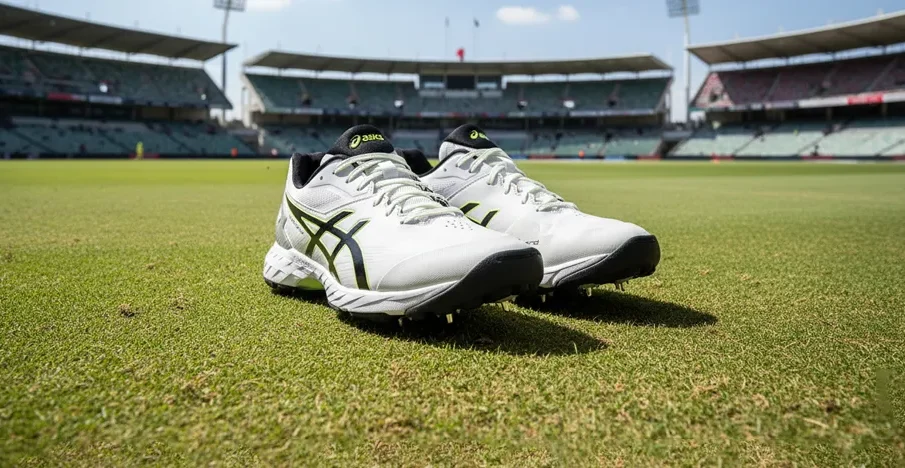
Picture this: a fielder sprints hard from mid-off, dives full-length to take a catch, then has to spring back up instantly. Or a fast bowler plants his front foot through 80 overs without a break. Every single movement in that scenario starts from the ground up, and the wrong footwear can end a match, or worse, a career, in one bad step.
Cricket shoes demand precision, grip, stability, and endurance, every single over. . A batter faces sharp lateral cuts. A bowler generates explosive ground force on every delivery. Fielders cover 10 – 15 km per game on surfaces that shift from dry, cracked outfields to damp morning grass. Regular sports shoes were simply never designed to handle any of this. The right cricket shoes are an engineered tool, and understanding why they are built differently is the first step toward performing at your best.
Why Cricket Shoes Are Built Differently From Regular Sports Footwear
Most athletes assume a good pair of running shoes or cross-trainers will hold up on the cricket field. They will not ,at least not well. A standard sports shoe is optimized for one type of movement (forward linear motion or gym-floor traction). Cricket demands multidirectional force, repeated heel-to-toe weight transfer, and precise ground contact across many hours.
Cricket footwear is engineered around three specific performance needs: grip on variable surfaces, lateral support through wide stance positions, and cushioning that holds up for a full day’s play. The outsole alone tells the whole story. A running shoe uses a smooth foam or rubber compound built for track or road. Cricket shoes use either spike plates (for grass) or herringbone rubber studs (for hard or artificial surfaces) ,both designed to dig in, hold the foot stable, and release cleanly so the player can move without slipping or twisting.
The upper construction matters just as much. Cricket uppers are typically wider through the toe box to allow natural foot splay during a batting stance, reinforced at the medial side to resist the inward roll that happens on every bowling stride, and built with breathable mesh panels to manage heat across a long innings.
⭐ Featured Snippet
Cricket shoes differ from regular sports shoes through specialised spike or stud outsoles for multi-surface grip, reinforced lateral support for batting and bowling stances, and durable cushioning systems designed for full-day play ,making them essential performance equipment rather than simple footwear.
How the Right Sole and Stud Configuration Drives Stability and Agility
The stud configuration on cricket footwear is not cosmetic ,it is precision engineering. Spike placement follows biomechanical research into how batters plant and pivot, how bowlers land and push through the crease, and how fielders accelerate and decelerate on grass.
For grass pitches, metal spikes offer deep penetration that locks the foot in place at ball release or during a defensive stroke. For artificial or hard surfaces, rubber studs spread the ground contact more broadly, reducing pressure points and preventing the ankle roll that costs fielders yards of pace and puts joints at risk. Some hybrid soles now place spikes under the forefoot (for power) and rubber around the heel (for safe landing) ,reflecting exactly how a bowler’s foot hits the ground.
Agility in cricket is not pure speed ,it is controlled change of direction. A fielder chasing a ball to the boundary needs to plant, pivot, and throw in one fluid motion. A shoe that does not lock the heel or support the ankle through that cut will bleed time and increase injury risk. Proper cricket studs give that dynamic stability without sacrificing the quick foot movement needed for sharp singles or a dive to the left.
Key Tip: Always match your sole type to the surface. Metal spikes on artificial turf damage both the surface and your joints. Rubber multi-studs on wet grass will cost you grip and stability exactly when you need them most.
The Impact of Footwear on Fielding and Long-Hour Endurance
Fielding is where poor footwear choices show up fastest, because fielders do not get the natural rest breaks that batting and bowling rotations provide. A fielder in the deep may stand, jog, sprint, and dive repeatedly across four to six hours ,and every hour compounds the fatigue in the foot, calf, and knee if the footwear is not absorbing and distributing load correctly.
Modern cricket shoes address this with dual-density midsoles: a firmer layer under the heel for stability and shock absorption on hard ground, and a softer layer under the forefoot for cushioned push-off. This is very different from a standard running shoe’s uniform foam stack, which flattens progressively under lateral and rotational forces the shoe was not designed to handle.
The collar and ankle design also plays a direct role in fielding performance. A low-cut shoe prioritises mobility ,ideal for outfielders who cover large areas and need unrestricted ankle flex when accelerating. A mid-cut or high-cut design sacrifices a little mobility to deliver ankle containment ,the better choice for bowlers or players on uneven outfields where the risk of a roll is higher. Picking the right profile for your role on the field is as tactical a decision as choosing your bat.
Beyond mechanics, there is the thermal and sweat management factor. On a hot day, a player’s feet will swell by up to a half size by the middle of the afternoon. Cricket shoe designs account for this with stretch zones, wider toe boxes, and moisture-wicking liners. A shoe that fits perfectly in the morning but constricts by the second session will alter your gait, cause blisters, and cost you the sharp reactions that separate good fielders from great ones. -
Choose the Right Cricket Shoes and Elevate Every Aspect of Your Game
Cricket is a sport played in milliseconds and centimetres ,and the margin between a run out and a safe return, a no-ball and a perfect delivery, often comes down to how well your footwear is doing its job. Regular sports shoes leave too many of these margins to chance. Purpose-built cricket footwear closes those gaps through engineered grip, structured support, intelligent cushioning, and surface-specific sole design.
The next step is practical: audit the surfaces you play on most, identify your primary role on the field, and match your footwear to those exact conditions. Do not carry over last season’s worn-down soles ,stud depth and midsole cushioning degrade quickly under a cricket season’s load, and the performance loss is real even if it is invisible to the eye.
What aspect of your game do you think better footwear would improve first ,your bowling run-up, your fielding explosiveness, or your batting comfort at the crease? Start there.