
Smart Reformers Are Coming to Singapore: What Digital Resistance Monitoring Means for Pilates Instruction
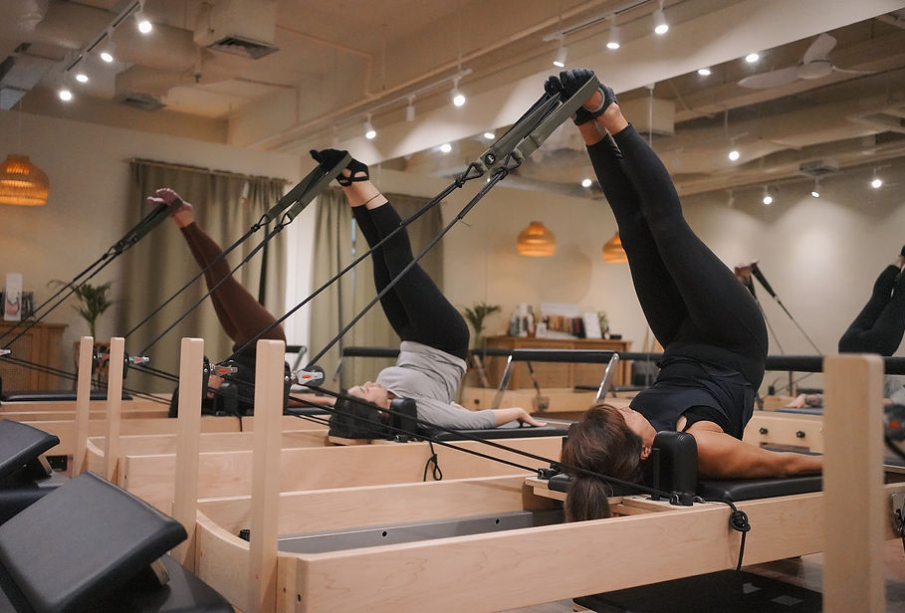
The pilates reformer has not changed much in fifty years.
The fundamental design, a spring-loaded carriage on a horizontal frame with a foot bar and shoulder blocks, is essentially what Joseph Pilates developed in the mid-twentieth century. Manufacturers have improved materials, refined spring calibration and developed more sophisticated adjustment mechanisms. But the core technology has remained analogue.
That is beginning to change.
Smart Reformer pilates Singapore is not yet mainstream, but the technology is sufficiently developed that the studios adopting it now are building genuine instructional advantages that will be meaningfully difficult to replicate once the market catches up.
What Smart Reformer Technology Currently Measures
The first generation of smart reformer technology focuses on two primary measurements.
Carriage position and velocity tracking uses linear encoders or optical sensors to track the precise position of the moving carriage throughout each exercise, at sampling rates high enough to capture the full velocity profile of the movement rather than simply start and end positions.
This data reveals movement quality dimensions that teacher observation cannot reliably detect in real time.
Movement velocity is particularly informative. The velocity at which the carriage is controlled during the eccentric return phase of exercises is the most direct measure of eccentric loading quality available in the reformer context. A practitioner who rushes the return phase, allowing the springs to pull the carriage back rapidly rather than controlling the return under muscular load, is significantly reducing the eccentric training stimulus that the exercise is designed to deliver.
Visual observation of carriage velocity by a teacher managing a group of six practitioners simultaneously is unreliable for detecting this quality variable. Carriage position sensors generate objective velocity data for every repetition that the teacher can review in real time on a monitoring screen, allowing immediate identification and correction of velocity quality issues without requiring undivided individual attention.
Spring resistance measurement uses force sensors at the spring attachment points to measure the actual resistance force being applied to the carriage throughout the movement range, rather than simply recording which spring setting is selected.
This distinction matters because the actual resistance delivered by a spring system is not simply the spring setting. It depends on the spring’s age and calibration state, the carriage position throughout the movement range, and the geometry of the attachment that changes as the carriage moves. Two reformers set to the same spring combination may deliver meaningfully different actual resistance profiles if one has been in service significantly longer and its springs have experienced fatigue-related calibration drift.
Force sensor data allows the actual resistance delivered to be quantified, compared between sessions and between machines, and used as the basis for progressive resistance prescription that is genuinely evidence-based rather than approximated from spring setting labels.
The Session Data That Changes How Teachers Instruct
The data generated by smart reformer systems during a session creates a real-time picture of each practitioner’s movement quality that transforms group instruction from a reactive observation task to a proactive quality management function.
A teacher monitoring a six-reformer group session through a tablet-based dashboard can see at a glance which practitioners are maintaining target velocity ranges, which are rushing their return phases, which are showing left-right asymmetry in their carriage control patterns, and which are working outside the resistance range appropriate for their rehabilitation status.
This information allows the teacher to direct their physical attention to the practitioners whose data indicates the most immediate need for correction, rather than moving through the room in a preset rotation that is equally likely to catch or miss quality issues randomly.
The data is also valuable for client communication. A practitioner who can see their own velocity profile on a screen during or after a session has objective evidence of the quality dimension their teacher has been cueing verbally. The combination of the objective data and the teacher’s verbal explanation produces faster motor learning than verbal cuing alone because it connects the instruction to a specific, verifiable performance measure.
Longitudinal Performance Tracking and Its Clinical Value
Session data stored over time creates a longitudinal performance record that has both clinical and commercial value.
For post-surgical rehabilitation clients, the longitudinal record of carriage velocity, resistance progression and left-right symmetry over their rehabilitation programme provides objective evidence of functional recovery that is meaningful to their supervising physiotherapist and orthopaedic specialist.
Presenting a physiotherapist with a graph showing that a total knee replacement patient’s eccentric carriage control velocity on their affected side has progressively converged toward their unaffected side over twelve weeks of reformer rehabilitation is a qualitatively different clinical communication from a teacher’s narrative report. It is objective, specific and interpretable within the clinical framework that the physiotherapist uses.
This clinical communication capability strengthens the professional relationships with Singapore’s healthcare community that generate the rehabilitation referral pipeline that sustains the clinical end of a reformer pilates business.
For general wellness clients, the longitudinal data supports the motivational function of objective progress visibility described in other articles in this series: practitioners who can see their performance improving over time are more motivated to continue than those who rely on subjective impression of progress.
Yoga Edition watches the development of smart reformer technology with genuine interest, evaluating its potential contribution to the instructional quality and clinical communication capability of its reformer pilates programme as the technology matures toward the reliability and cost accessibility that broader adoption requires.